From “I Have an Idea” to “It’s Live”: What Really Happens Inside a Software Project
Understand the four stages of a software project, the red flags when hiring an agency, and your role as client, before you spend a rupee.

7 min read
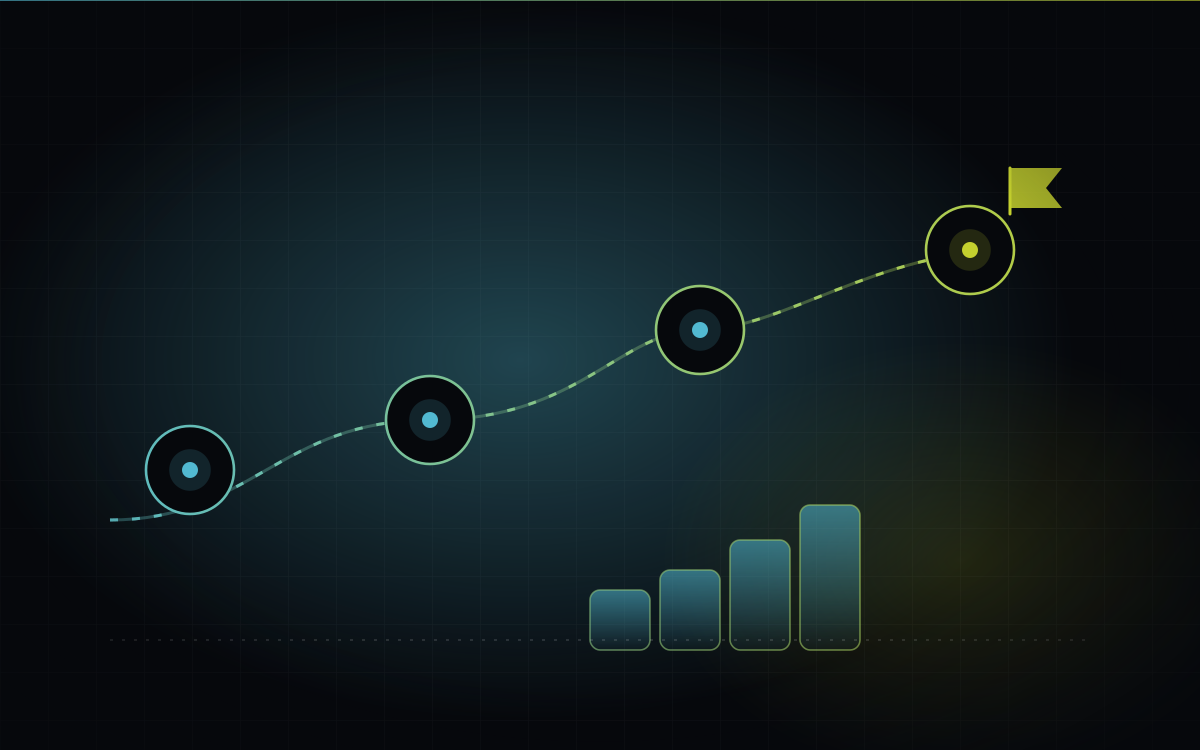
Table of contents
Most business owners hire a software team the way they’d hire a magician: describe what you want, step back, and hope something impressive appears.
Three months later, it either does, or you’re looking at a half-finished system, a bigger bill and a nagging feeling that nobody quite understood what you meant.
Here’s the secret that changes everything: software projects aren’t magic. They follow a predictable path. Once you can see that path, you can ask better questions, spot trouble early and get far more for your money.
Let’s walk through it, step by step.
The short version
Healthy projects move through four stages: Discover, Plan, Build, Evolve.
Most failures start before a single line of code is written: unclear goals, no decision-maker, vague scope.
The client’s role matters as much as the developer’s.
There are clear red flags when choosing an agency. Learn them before you sign anything.
Why software projects go wrong
Before the good path, let’s name the usual ways projects go off the rails. These patterns show up again and again:
The goal is fuzzy. “We need a system” isn’t a goal. “Reduce order processing from two days to two hours” is.
Nobody owns decisions. Five stakeholders, five opinions, and no one empowered to say “yes, this.”
The scope keeps growing. Every new idea feels small. Together they double the project.
Feedback arrives late. Problems discovered at the end cost far more than problems caught in week two.
Testing is treated as an afterthought. The real world is messier than a demo.
Nobody planned for after launch. Software that isn’t looked after slowly decays.
Notice what’s missing from this list: technical brilliance. Projects rarely fail because the code was too clever. They fail because of clarity, communication and planning.
The four stages of a healthy project
Stage | What happens | What you should receive | Your role |
Discover | The team studies how your business really works | A clear problem statement and priorities | Explain honestly, show real examples |
Plan | Scope, screens, timeline and budget are agreed | A written scope, wireframes, a phased plan | Make decisions, approve scope |
Build | The system is designed, developed and tested in steps | Working versions to try along the way | Give fast, specific feedback |
Evolve | Launch, training, monitoring and improvement | A live system, documentation, a support plan | Use it, report what you learn |
Let’s look inside each.
Stage 1: Discover (understand before you build)
This is the most underrated stage. A good team spends time with you and your people, watching how work actually flows: where orders arrive, who touches them, where things get stuck, what gets retyped.
A good discovery produces a shared answer to three questions:
What problem are we solving?
For whom?
How will we know it worked?
If a team gives you a price before asking these, be cautious. They’re guessing.
Stage 2: Plan (agree on the map)
Now the problem becomes a plan. Expect to see:
A written scope: what’s in, what’s out, and what waits for a later phase.
Wireframes or prototypes: rough screens you can click through before anything is built. Changing a sketch is cheap. Changing finished software is not.
A phased roadmap: usually a focused first version, then improvements.
A timeline and budget that match that scope.
This is where “phase one” becomes your best friend. Launching a smaller, solid version first beats waiting a year for a giant one.
Stage 3: Build (see progress, not promises)
Healthy builds happen in short cycles. Every couple of weeks you should see something real: a screen that works, a report that runs, a workflow you can test with your own data.
This is also where your feedback matters most. “I don’t like it” helps nobody. “This screen needs the customer’s phone number visible before the order total” helps enormously.
Testing happens throughout, not just at the end: checking that things work, that they keep working when something else changes, and that real people can use them without a manual.
Stage 4: Evolve (launch is the starting line)
Going live isn’t the end. It’s when reality begins. Expect:
Training for the people who will use it daily.
Close monitoring in the first weeks to catch problems quickly.
Documentation, so the system isn’t a mystery to anyone.
A plan for improvements, because your business will keep changing and your software should keep up.
Software that isn’t maintained doesn’t stay still. It slowly falls behind, as the tools it depends on change and your needs move on.
Where the money actually goes
Here’s a principle every experienced software team knows: the later a problem is found, the more it costs to fix.
A misunderstanding caught during Discover costs a conversation. Caught during Planning, it costs a redrawn sketch. Caught during Build, it costs rework. Caught after launch, it can cost rework, data repair and unhappy users.
That’s why time spent early, understanding and planning, isn’t a delay. It’s the cheapest insurance in the whole project.
Fixed price, hourly or phased: which is right?
Model | Works well when | Watch out for |
Fixed price | Scope is small and very clearly defined | Changes become arguments; corners can get cut |
Time and materials | Scope is uncertain or evolving | Costs can drift without a budget cap and regular reviews |
Phased (fixed price per phase) | Most real projects | Needs a good plan upfront; usually the best balance |
There’s no universally right answer, but for most business systems, a phased approach gives you predictability without locking you into guesses.
Eight red flags when choosing an agency
They quote before asking questions. A price without understanding is a guess.
They only compete on price. Very low quotes often mean missing scope, not magic efficiency.
No written scope. If it isn’t written, it will be disputed later.
They can’t show relevant past work, or won’t let you speak to past clients.
Vague about who actually does the work. Know who is building your system.
No mention of testing. Ask how they test. The answer should be specific.
Nothing said about life after launch. Support and maintenance should be discussed upfront.
Guaranteed timelines with zero conditions. Honest teams explain what the timeline depends on.
Your job as the client
The projects that go best share one thing: an involved client. You don’t need technical skills. You need to:
Name one decision-maker. One person who can say yes.
Set aside regular time. An hour or two a week for feedback keeps everything moving.
Share real examples. Actual order forms, sheets, reports. Not descriptions of them.
Involve the daily users early. The people who will live in the system know things you don’t.
Speak up early. Doubts voiced in week two are cheap. Doubts voiced in week twelve are not.
Your pre-kickoff checklist
We can describe the problem in one sentence
We know how we’ll measure success
One person has final say on decisions
We’ve gathered real sample documents and data
We know which first workflow matters most
Daily users have been told, and asked for input
We’ve discussed what happens after launch
Scope, timeline and payment milestones are in writing
Frequently asked questions
It depends on scope. A focused first version can often be ready in weeks, while larger systems take months. A phased plan lets you start getting value long before everything is finished.
The bottom line
A software project isn’t a leap of faith. It’s a series of small, clear steps, and the more clearly you can see them, the better the outcome.
Choose a team that asks questions before quoting, shows you progress as it goes, and talks about what happens after launch before you do.
Thinking about a project and not sure where to start? At BeMotion, every engagement follows Discover, Plan, Build, Evolve. Start with a conversation and we’ll help you shape the first phase, whether or not you end up building with us.
Start with a Discovery conversation →
Written by
BeMotion Nova Labs
Software, intelligent systems and technology solutions built for ambitious businesses.
View all articles by BeMotion Nova LabsReady to get started?
Let's talk about what you want to build.
Tell us where you are and where you want to get to. We will reply with honest next steps.
Discuss your project